- 移动端


北京百普赛斯生物科技股份有限公司品牌商
14 年
手机商铺
- NaN
- 0
- 0
- 2
- 2

推荐产品
公司新闻/正文
从“更像心脏”到“更有预测力”:心脏安全评价的模型进化
7127 人阅读发布时间:2026-09-24 15:37
药物研发中,心脏安全性始终是一个关键问题。即便靶点活性与药效俱佳,QT间期延长、心律失常、心肌损伤或收缩功能下降,也可能让药物终止开发。历经数十年,心脏安全评价已经形成一套较为成熟的体系:从犬、非人灵长类等动物模型、hERG离子通道筛查,到二维人源 iPSC 心肌细胞(hiPSC-CMs),这些方法帮助研发人员识别并排除了大量潜在高风险化合物。然而,一个核心问题始终悬而未决:这些非临床风险信号,究竟能在多大程度上预测人体风险?
动物模型是重要的非临床评价工具。与体外模型相比,动物能在完整生理环境下整合心血管、代谢与多器官间的相互作用,呈现单一细胞或离子通道难以观察的整体效应。一项针对 150 种药物、221 项已知人体毒性事件的研究显示,结合啮齿类与非啮齿类数据,相同靶器官毒性的检出率约为 71%1;IQ Consortium 对 182 种药物非临床与临床数据的分析则表明,动物实验预测临床毒性的敏感性(Sensitivity)约 48%、特异性(Specificity)约84%,阳性预测值(PPV)与阴性预测值(NPV)分别约 43% 和 86%2。
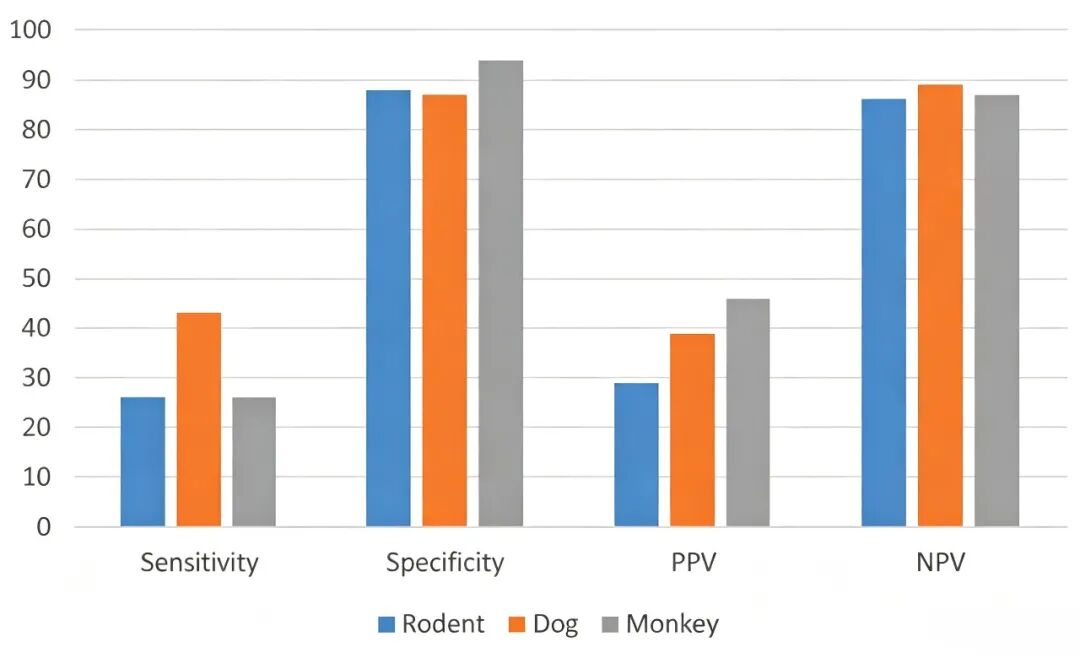
按试验物种分组的一致性参数
但动物模型的优势,也伴随着一个无法回避的局限:不同物种在心率、离子通道组成、动作电位、药物代谢与心肌生理等方面存在显著差异。因此,动物模型中观察到的心脏安全性结果,并不能直接推断人体中也同样安全3。
hERG 钾通道参与心肌复极,其抑制可延长动作电位时程、增加 QT 间期延长风险,因而是心脏安全评价重要的早期筛选指标。一项针对 39 种药物的回顾性分析显示,以 hERG 安全窗预测临床校正 QT 间期(QTc)延长,敏感性约 64%、特异性约 88%、AUC 为 0.724。然而,心肌复极并非单一离子通道独立决定:多种离子电流相互作用、共同维持动作电位,药物对多通道的影响可能叠加或抵消,最终呈现不同的电生理与心律表型。因此,hERG 抑制既不等同于 QT 间期延长,也不等同于尖端扭转型室性心动过速(TdP)。
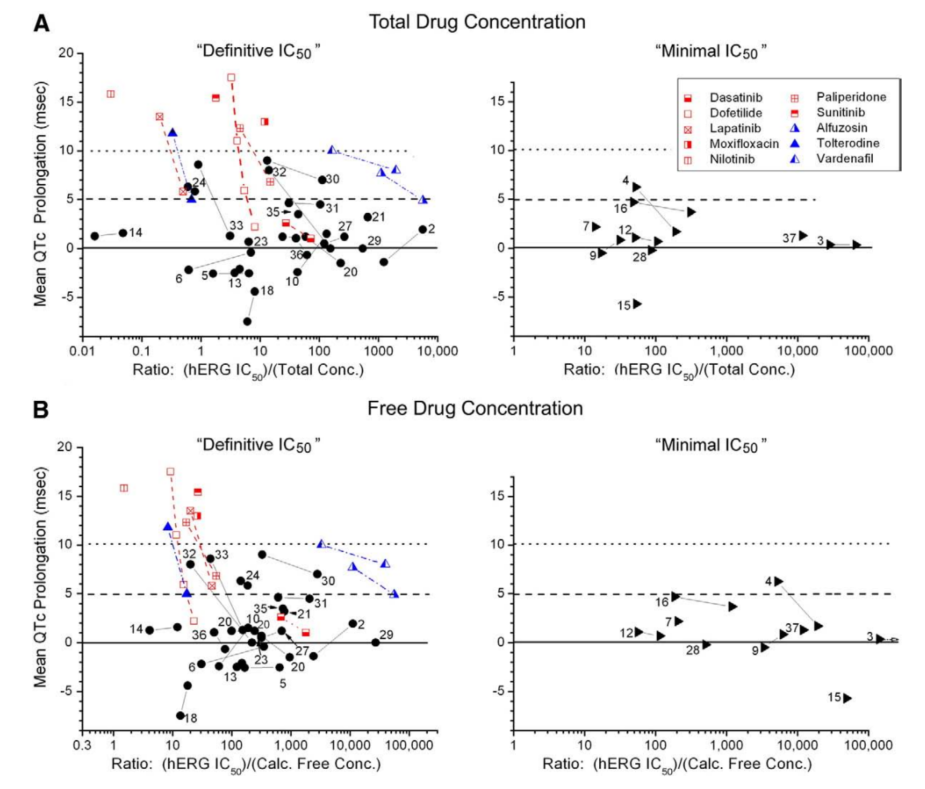
hERG安全窗与临床QTc延长的对应关系。散点图显示,无论低安全窗(<30)还是高安全窗(>1000)区域,均存在QTc延长(≥5 ms)与无延长(<5 ms)的重叠,表明hERG阻断效力与临床复极化延迟并非一一对应,单一通道信号不足以预测致心律失常风险,需转向多层级功能整合评价。
综合体外致心律失常风险评价(CiPA)的提出,转变了这一评价思路:它并非简单增加检测项目,而是将多离子通道作用、计算机模拟、人源心肌细胞功能响应与临床数据联系起来,共同判断致心律失常风险。评价焦点由此从“某个通道是否被阻断”,转向“这些作用综合起来,是否会形成有临床意义的心脏功能后果”——评价重点从单一分子信号走向多层级功能整合。
二维 hiPSC-CMs 显著提升了心脏安全性评价的人源相关性。借助微电极阵列(MEA)、钙成像和收缩功能测定等技术,可直观评估药物对人源心肌细胞电活动、钙处理及收缩功能的影响。然而,真实心脏是一个多细胞协同的复杂器官,其功能不仅依赖心肌细胞本身,还依赖心肌细胞与成纤维细胞、内皮细胞等其他细胞类型之间的通讯,以及细胞外基质和局部机械环境的共同调控。因此,虽然 hiPSC-CMs 能有效评估药物对离子通道的直接作用及其引发的单细胞水平功能变化,但涉及组织结构、多细胞互作和长期适应性改变的复杂毒性过程——如线粒体功能障碍、氧化应激、纤维化反应和多细胞毒性——则难以在二维体系中充分模拟。
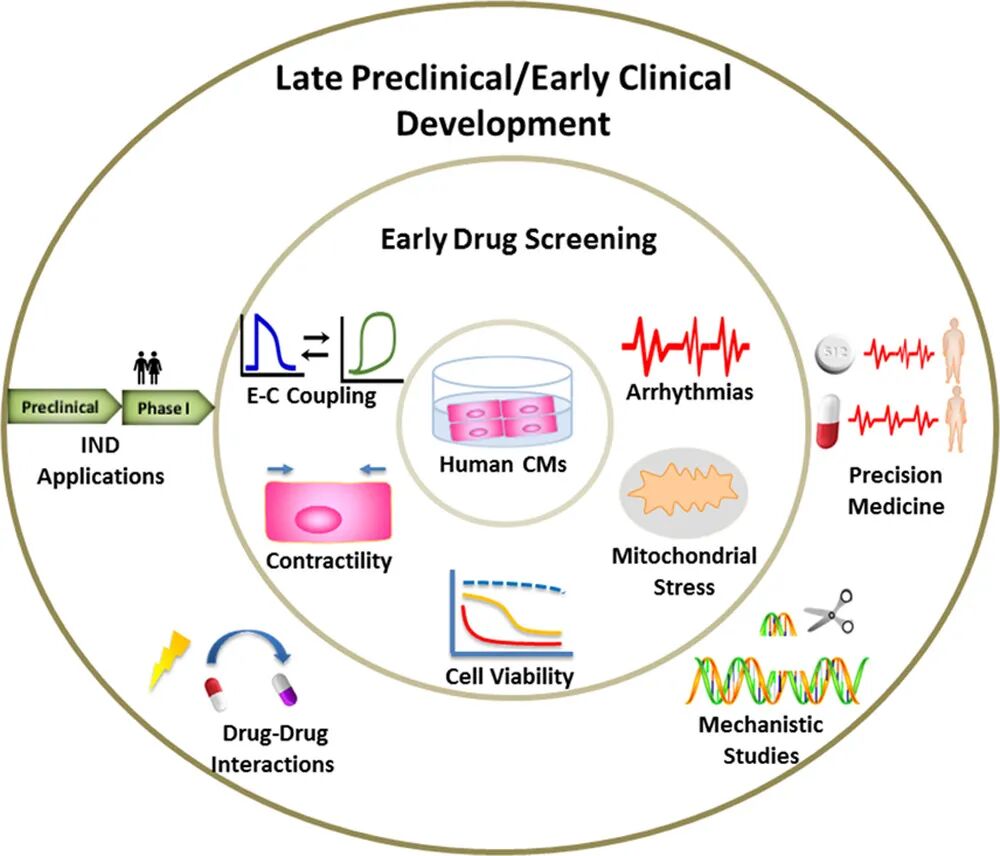
人源心肌细胞(CM)在早期药物筛选中可评估的关键表型变化
如果说二维 hiPSC-CMs 主要用于观察细胞层面的功能变化,那么心脏类器官则进一步将模型拓展到三维组织层面。从二维到三维,不只是空间结构的变化,也意味着细胞间相互作用、组织结构以及功能活动能够在更接近人体心脏组织的环境中得到更综合的呈现。已有研究表明,心脏类器官能够模拟钙处理异常、代谢改变、纤维化反应以及多柔比星等诱导的心脏毒性等组织层级表型,为解析复杂心脏毒性机制、建立更可靠的临床前-临床转化关联提供了新的研究平台5,6。同时,通过长期培养和重复给药,心脏类器官也有望从急性筛查进一步拓展至重复给药和慢性毒性研究,为提高药物心脏毒性的转化预测能力提供有力工具。
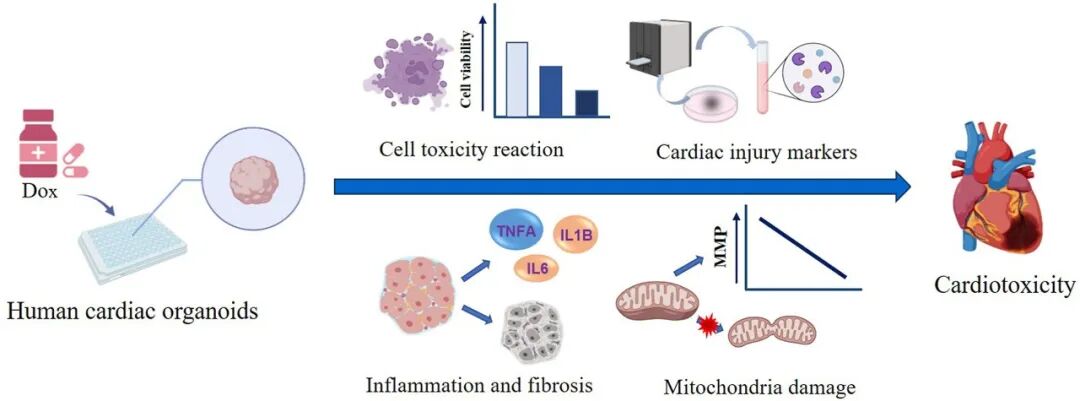
多柔比星(Dox)诱导人心脏类器官心脏毒性的机制示意图
从动物模型、hERG,到二维 hiPSC-CMs,再到心脏类器官,心脏安全评价一直在向更具人体相关性的模型和更综合的功能读出发展。随着新方法学(NAMs)的发展,监管机构也越来越强调模型的可靠性、科学有效性和明确的应用情境7。因此,“更像人体”只是模型发展的起点,能否提供稳定、可重复,并与人体风险建立可靠关联的安全性信号,才真正决定其转化价值。
基于这一思路,ACROBiosystems百普赛斯的即用型心脏类器官(货号:CIPO-HWL01),无需自主分化、批次均一稳定、功能状态成熟,为药物心脏安全性研究提供更接近人体组织环境的三维模型。
-
通过MEA对hiPSC来源心脏类器官进行电生理特征分析
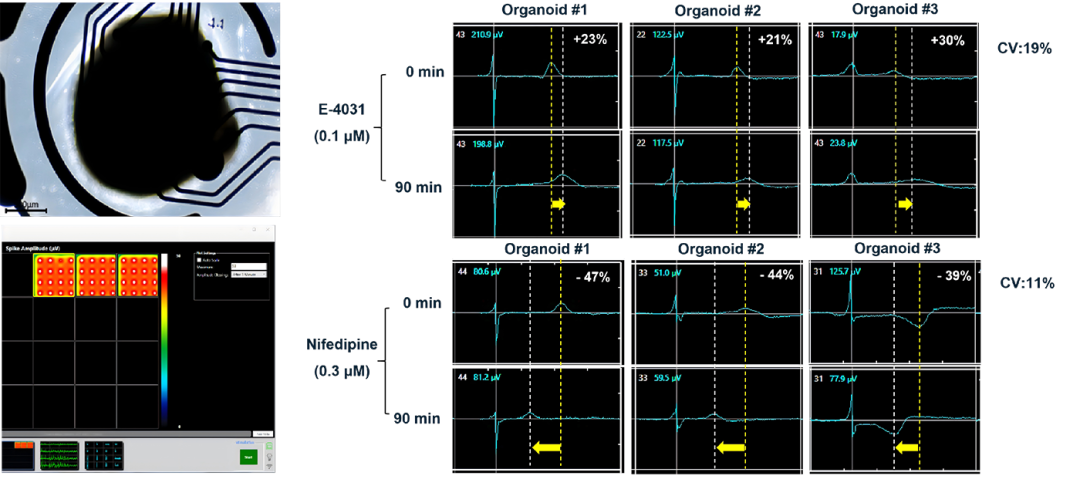
MEA记录显示,心脏类器官在多个电极上具有稳定的电活动。经hERG/IKr钾通道阻断剂E-4031以及L型钙通道阻断剂nifedipine处理后,类器官在MEA来源电生理读数中表现出化合物相关变化,支持该模型用于心脏功能与安全性评估的潜在应用。
参考资料
1. Olson H, Betton G, Robinson D, et al. Concordance of the toxicity of pharmaceuticals in humans and in animals. Regulatory Toxicology and Pharmacology. 2000;32(1):56–67. doi:10.1006/rtph.2000.1399
2. Monticello TM, Jones TW, Dambach DM, et al. Current nonclinical testing paradigm enables safe entry to First-In-Human clinical trials: The IQ Consortium nonclinical to clinical translational database. Toxicology and Applied Pharmacology. 2017;334:100–109. doi:10.1016/j.taap.2017.09.006
3. Pang L, Sager P, Yang X, et al. Workshop Report: FDA Workshop on Improving Cardiotoxicity Assessment With Human-Relevant Platforms. Circulation Research. 2019;125(9):855–867. doi:10.1161/CIRCRESAHA.119.315378
4. Gintant G. An evaluation of hERG current assay performance: Translating preclinical safety studies to clinical QT prolongation. Pharmacology & Therapeutics. 2011;129(2):109–119. doi:10.1016/j.pharmthera.2010.08.008
5. Richards DJ, Li Y, Kerr CM, et al. Human cardiac organoids for the modelling of myocardial infarction and drug cardiotoxicity. Nature Biomedical Engineering. 2020;4:446–462. doi:10.1038/s41551-020-0539-4
6. Chen X, Lu N, Huang S, Zhang Y, Liu Z, Wang X. Assessment of doxorubicin toxicity using human cardiac organoids: A novel model for evaluating drug cardiotoxicity. Chemical Biology Interactions. 2023;386:110777. doi:10.1016/j.cbi.2023.110777.
7. U.S. Food and Drug Administration. General Considerations for the Use of New Approach Methodologies in Drug Development: Draft Guidance for Industry. March 2026. Available from:

ACROBiosystems
inquiry@acrobiosystems.com
15117918562
(备注:姓名+公司)